By executive order, Argentina’s national government outlaws access to trans-specific healthcare for children and youth under 18, including those who had already been prescribed hormones and puberty blockers.


Argentina outlaws healthcare for trans youth
By executive order, Argentina’s national government outlaws access to trans-specific healthcare for children and youth under 18, including those who had already been prescribed hormones and puberty blockers.
Argentina passes a law expanding abortion rights….
Argentina passes a law expanding abortion rights. Thanks to the presence of transmasculine activists within the reproductive justice movement, the wording of this law affords these rights not only to women, but also to “people of other gender identities with the capacity to gestate.”
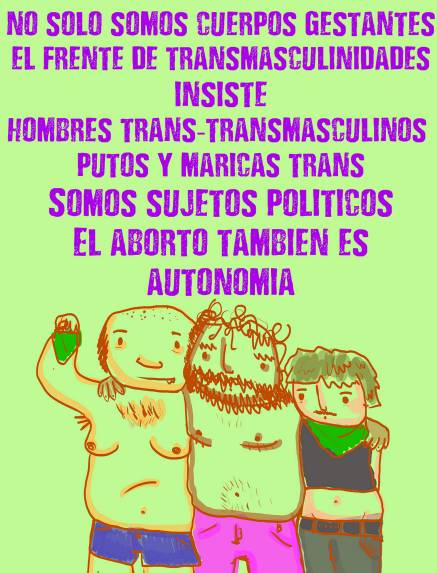
A rally from Argentina’s marea verde (green tide), the feminist movement in favor of expanding abortion rights…
Travestis and trans people help organize with Argentina’s marea verde (green tide), the feminist movement in favor of expanding abortion rights. Travesti activists like Lohana Berkins are among the first public supporters of abortion, pointing out that bodily autonomy is a shared principle among both movements. Transmasculine people also highlight that abortion rights are needed by many people who aren’t women.

A court authorizes the first successful legal change of name and registered sex in Argentina. This was granted to Mariela Muñoz, a transsexual woman who had spent years fighting for her right to adopt and raise children. The ruling required invasive psychological evaluations and exposed a contradiction in the legal system: courts treated sex reassignment […]
A court authorizes the first successful legal change of name and registered sex in Argentina. This was granted to Mariela Muñoz, a transsexual woman who had spent years fighting for her right to adopt and raise children. The ruling required invasive psychological evaluations and exposed a contradiction in the legal system: courts treated sex reassignment surgery as proof of self-perceived identity, but surgery was prohibited in Argentina (Muñoz obtained surgery in Chile in the 1980s). Her case set the precedent that allowed others to pursue legal identity changes through judicial actions.
Activist Karina Urbina founds Argentina’s first transsexual organization, TransDeVI, Transexuales por el Derecho a la Vida y la Identidad (Transsexuals for the Right to Life and Identity)…
Activist Karina Urbina founds Argentina’s first transsexual organization, TransDeVI, Transexuales por el Derecho a la Vida y la Identidad (Transsexuals for the Right to Life and Identity). Its main demands were the legal recognition of transsexuals’ names and identities, and the access to what at the time were described as “sex changes.”
Argentina passes a law during the Onganía military dictatorship prohibiting “surgical interventions that modify the sex of a patient, unless performed after judicial authorization”…
Argentina passes a law during the Onganía military dictatorship prohibiting “surgical interventions that modify the sex of a patient, unless performed after judicial authorization.” This legislation would remain in effect until the country’s Gender Identity Law passed in 2012.
The unprecedented visibility of the mid 2010s began to be challenged, as activists critiqued the centering of respectability and the exclusion of poor, disabled, Black and brown trans communities…
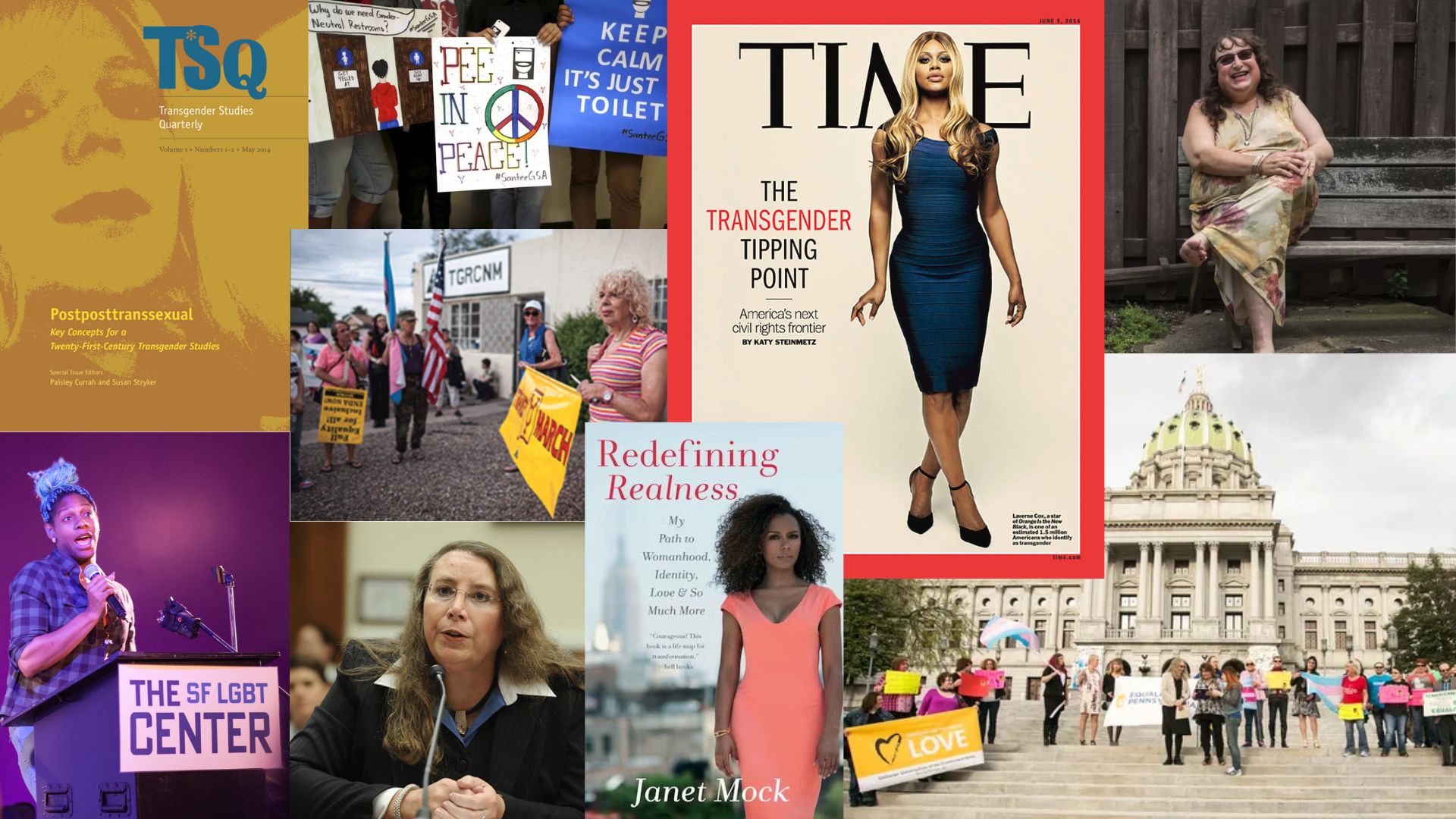
The unprecedented visibility of the mid 2010s began to be challenged, as activists critiqued the centering of respectability and the exclusion of poor, disabled, Black and brown trans communities. While some states passed robust gender identity protections, others became pushing “bathroom bills”, school restrictions, and religious exemption laws. Despite the increased visibility, trans people, especially Black trans women, faced disproportionate violence and data on violence towards trans people gained mainstream attention. However, the 2016 election, marked in some part as a mandate on gender identity, marked a sharp rise in transphobic political rhetoric. The Trump administration rolled back healthcare protections, banned trans people from military service, and gutted civil rights guidance on school inclusion. The trans rights movement became more visibly connected with abolitionist, disability justice, and anti-racist efforts. Mutual aid, grassroots organizing, and direct action surged, especially after the 2020 Black Lives Matter protests. An unprecedented wave of anti-trans legislation (especially targeting youth) was introduced and passed in dozens of states. Trans-led legal organizations (TLDEF, ACLU, TGIJP) have challenged these laws in courts, with some federal judges blocking or striking down the most extreme policies. Misinformation campaigns surged online, using the rhetoric of protecting children to gain support. These coordinated campaigns have attempted to link trans rights to conspiracy and child abuse.
The “trans tipping point” era emerged, with rising public figures like Laverne Cox and Janet Mock challenging mainstream narrative of trans life…
The “trans tipping point” era emerged, with rising public figures like Laverne Cox and Janet Mock challenging mainstream narrative of trans life. Major wins and setbacks in the legal arena included expanded healthcare access for trans people, the repeal of “Don’t Ask, Don’t Tell”, and fights over bathroom bills and school access. Conservative lawmakers coalesced around the issues of bathrooms, sports, and healthcare, signaling a new phase of organized anti-trans legislation. Increased public awareness in this climate brought more support and more polarization. Trans youth became central figures in cultural and legal battles.
National trans advocacy organizations like the National Center for Transgender Equality and the Transgender Law Center emerged…
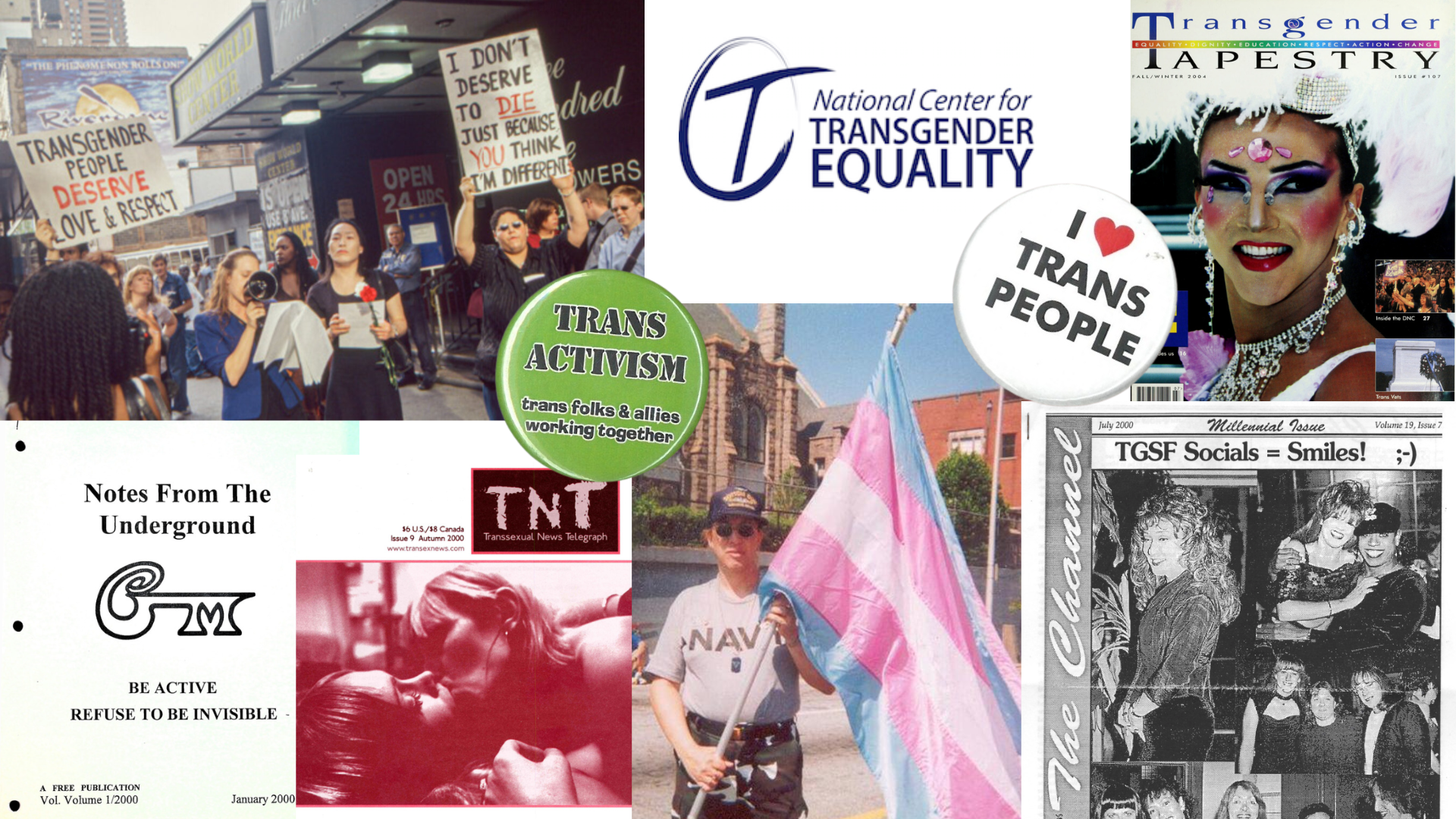
National trans advocacy organizations like the National Center for Transgender Equality and the Transgender Law Center emerged, many of which focused on reform and legal rights. Landmark policy efforts like the push for gender marker changes and non-discrimination policies in the workplace marked the legal efforts of the early 2000s. A growing, but limited, media presence of trans voices gave exposure. Anti-trans sentiment grew alongside increased visibility, evident in conservative policy pushes and messaging from the religious right.