Two transmasculine archives created in Argentina, one of them following one of the nation’s first massive meetings of trans men and other transmasculine individuals in the city of Córdoba.


Two transmasculine archives are created in Argentina…
Two transmasculine archives created in Argentina, one of them following one of the nation’s first massive meetings of trans men and other transmasculine individuals in the city of Córdoba.
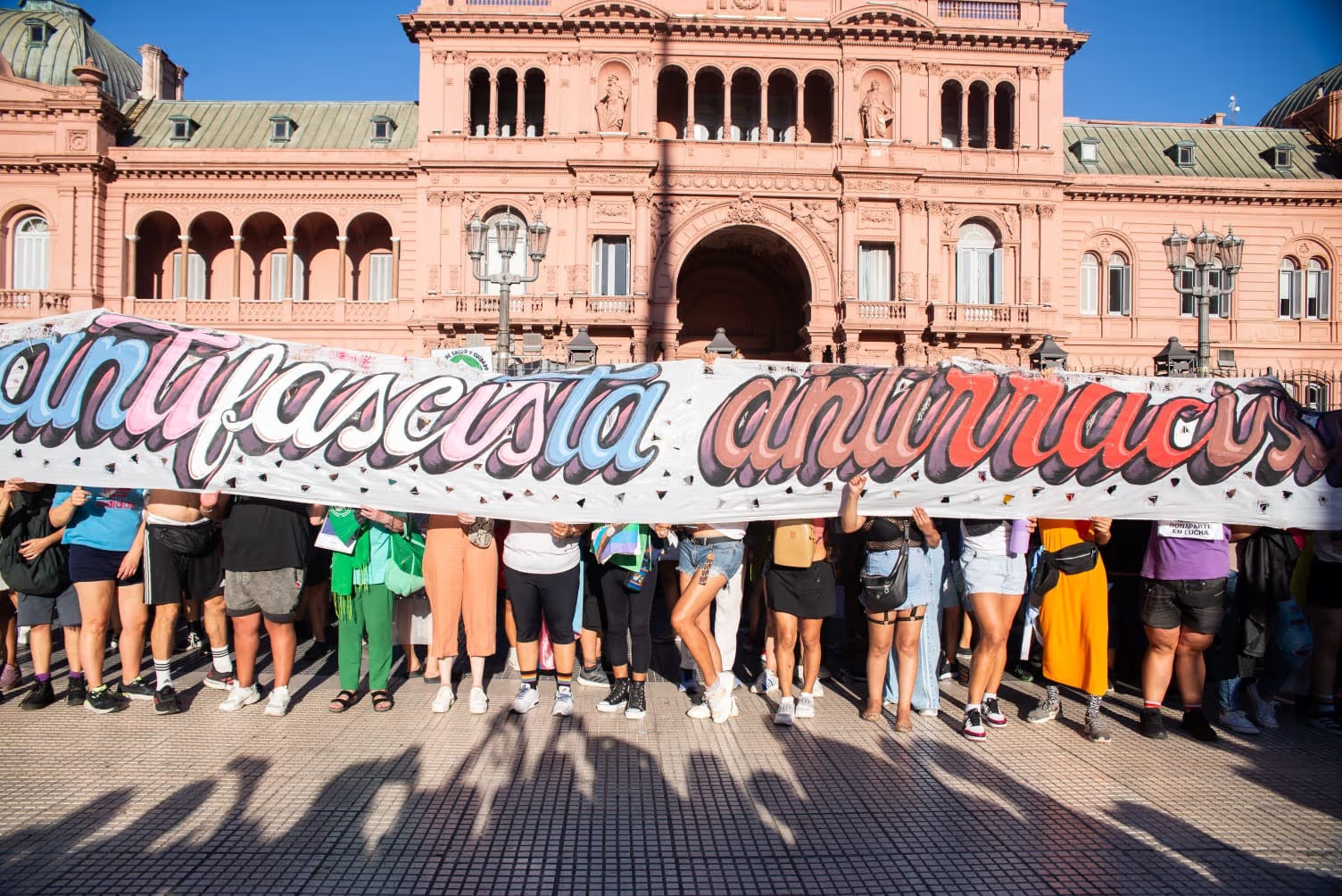
Various cities across Argentina hold massive anti-racist and anti-fascist pride protests.
Various cities across Argentina hold massive anti-racist and anti-fascist pride protests in response to President Javier Milei’s homophobic and transphobic speech at the World Economic Forum.
Trans and travesti workers in Argentina’s public sector begin organizing under the name Zaguán TranSindical…
Trans and travesti workers in Argentina’s public sector, many of whom had been hired through the national and county-wide travesti-trans quotas, begin organizing under the name Zaguán TranSindical. Zaguán TranSindical aims to improve conditions for all workers and bring trans issues to the attention of labor unions. When the national government begins firing employees in 2024 under Javier Milei’s presidency, Zaguán successfully appeals the dismissal of several trans individuals.
Argentina passes a law expanding abortion rights….
Argentina passes a law expanding abortion rights. Thanks to the presence of transmasculine activists within the reproductive justice movement, the wording of this law affords these rights not only to women, but also to “people of other gender identities with the capacity to gestate.”
The president of Argentina passes an executive order reserving at least 1% of federal government jobs for travesti and trans workers…
The president of Argentina passes an executive order reserving at least 1% of federal government jobs for travesti and trans workers. This quota, which builds on the trans labor quota law of Buenos Aires, becomes a national law in 2021, with additional provisions promoting trans employment and tax benefits for employers.
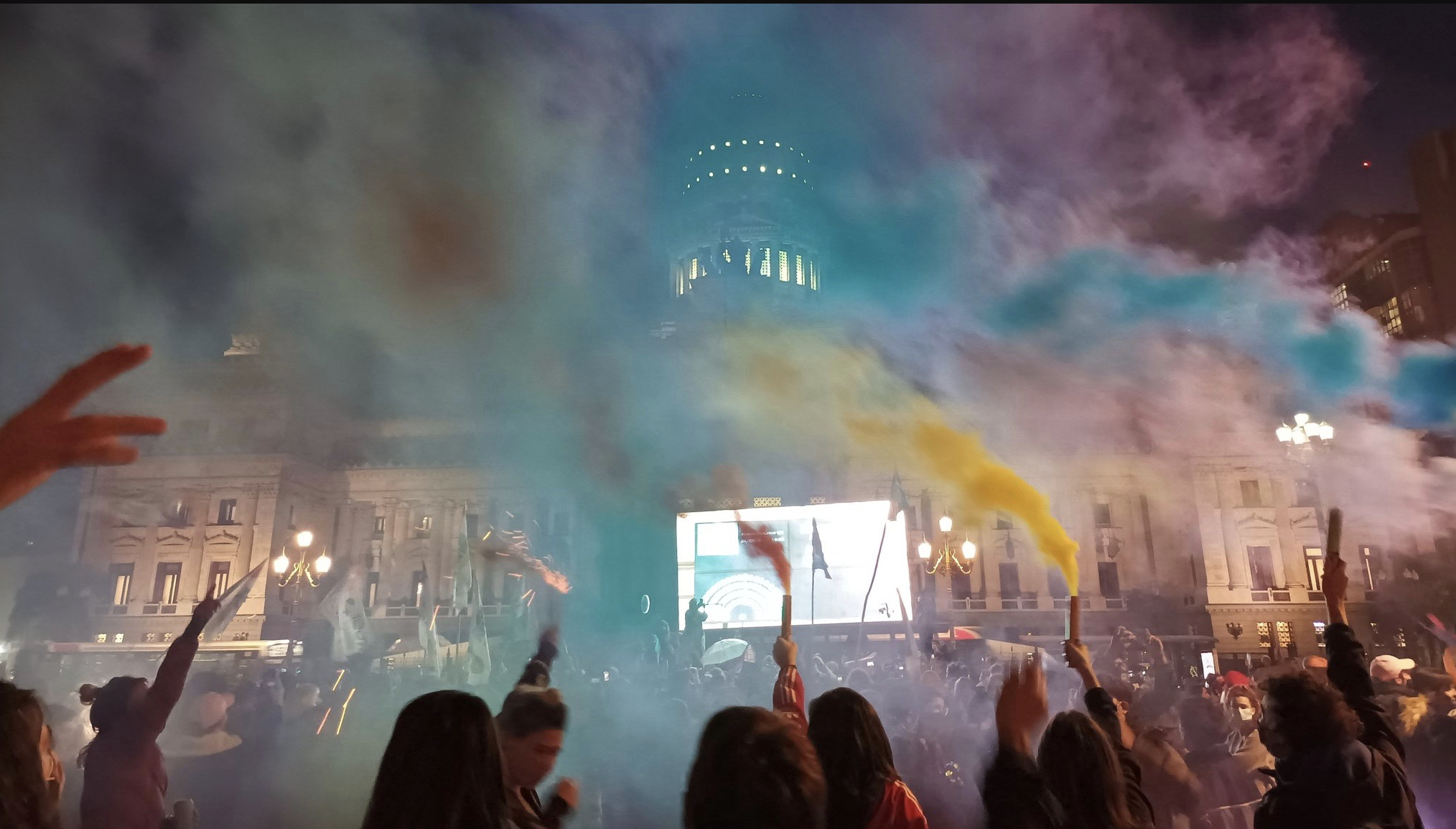
A rally from Argentina’s marea verde (green tide), the feminist movement in favor of expanding abortion rights…
Travestis and trans people help organize with Argentina’s marea verde (green tide), the feminist movement in favor of expanding abortion rights. Travesti activists like Lohana Berkins are among the first public supporters of abortion, pointing out that bodily autonomy is a shared principle among both movements. Transmasculine people also highlight that abortion rights are needed by many people who aren’t women.
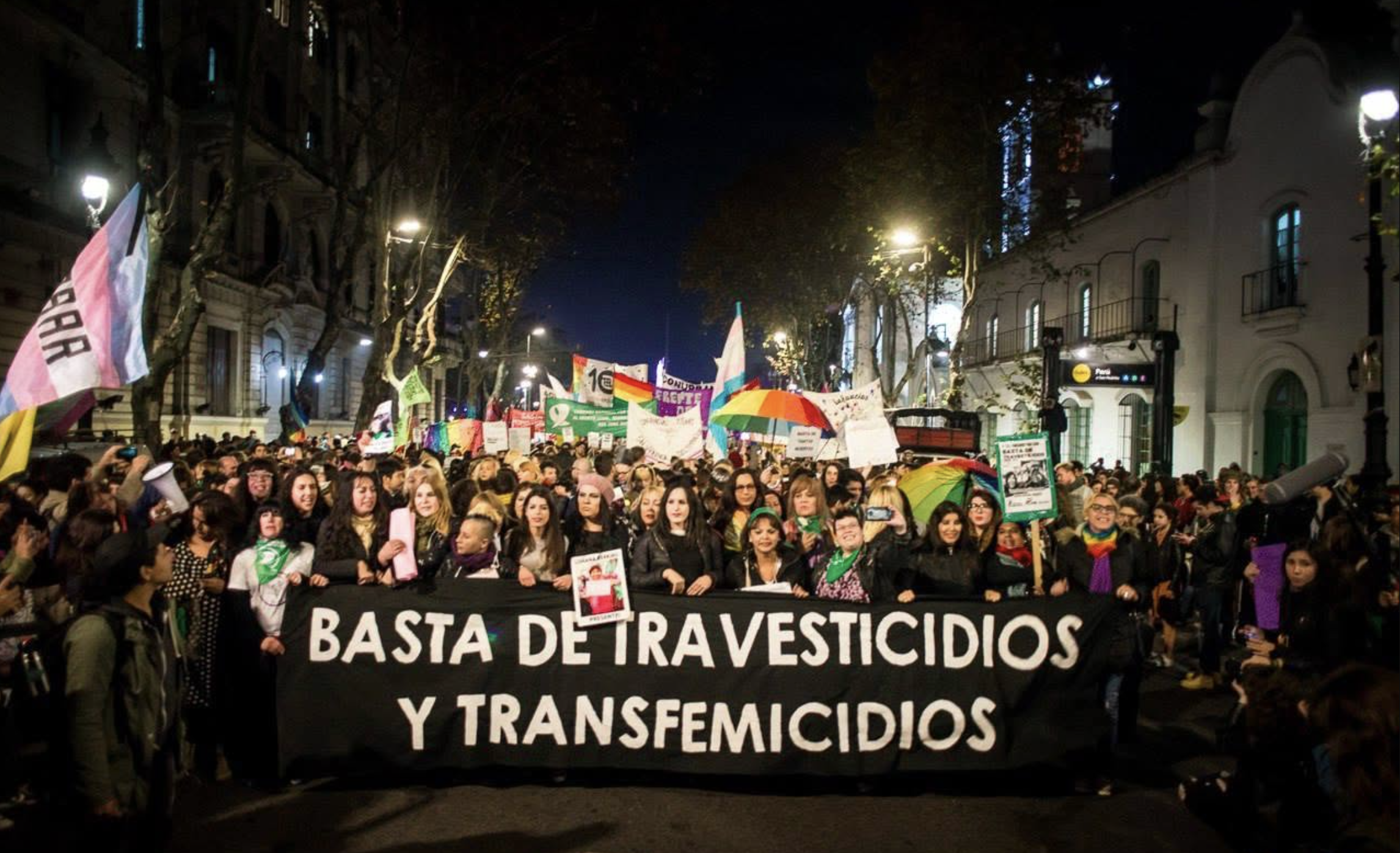
In late June, coinciding with the anniversary of the Stonewall Riots, activists hold the first annual protest against travesticide (travesti genocide) in Buenos Aires…
In late June, coinciding with the anniversary of the Stonewall Riots, activists hold the first annual protest against travesticide (travesti genocide) in Buenos Aires. The demonstration honors travesti leader, Diana Sacayán, who was killed in her home the previous year. The specific focus on travesticide calls attention to the murders of travestis as well as poor living conditions like a lack of housing and healthcare.
The province of Buenos Aires, Argentina, passes a law that reserves 1% of jobs in the provincial public sector for travestis and trans people. This quota was a direct result of grassroots travesti-trans activism, headed by working-class, travesti activist Diana Sacayán.
The province of Buenos Aires, Argentina, passes a law that reserves 1% of jobs in the provincial public sector for travestis and trans people. This quota was a direct result of grassroots travesti-trans activism, headed by working-class, travesti activist Diana Sacayán.
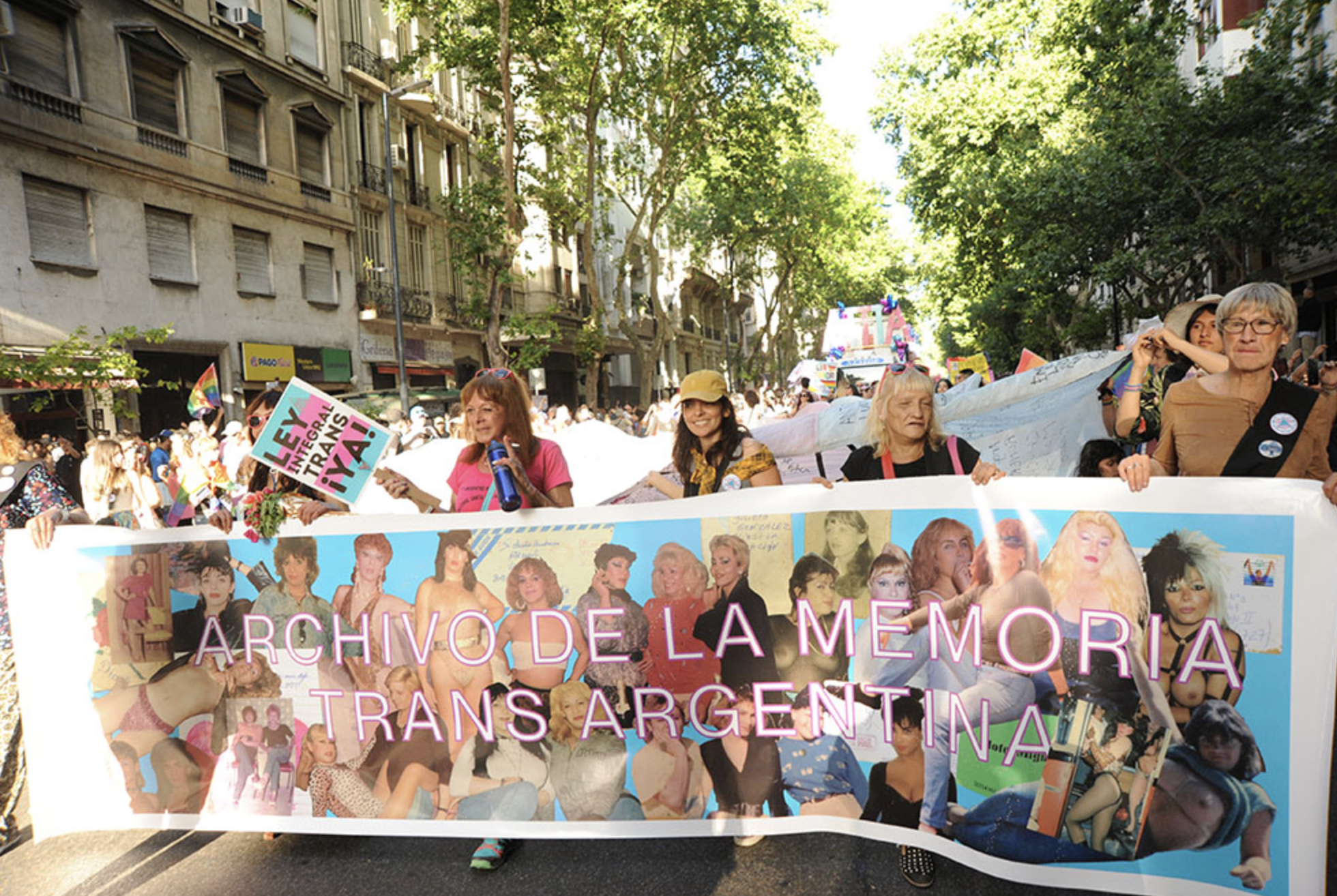
Following Baudracco’s death in 2012, the AMT is formalized in 2014 as a digital preservation project to protect the historical memory of the travesti/trans community from the early 1900s to the present…
The Trans Memory Archive (AMT) of Argentina is created, first conceived in the 1990s by travesti-trans activists, Claudia Pía Baudracco and María Belén Correa. Following Baudracco’s death in 2012, the AMT is formalized in 2014 as a digital preservation project to protect the historical memory of the travesti/trans community from the early 1900s to the present. The Archive inspires several other memory projects across Latin America.